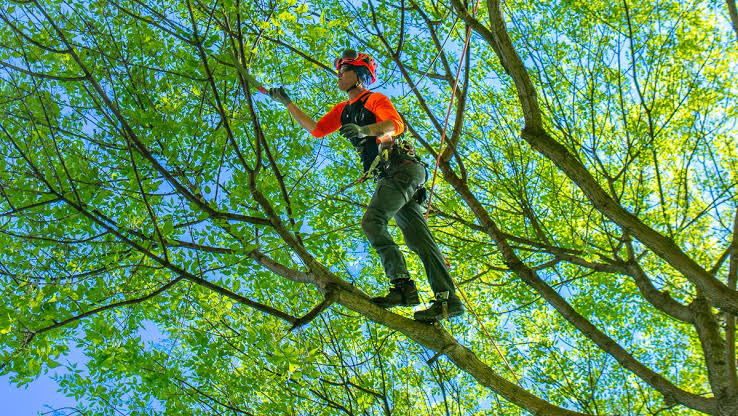

Not every tree problem has the same solution. A tree with a structural problem that has been identified early enough can often be managed successfully with targeted pruning, cabling, or treatment — saving the specimen and avoiding the cost and disruption of removal. A tree that has progressed beyond the point where management is safe or practical needs to come down cleanly, completely, and safely by a qualified team with the right equipment.
Understanding the distinction between these scenarios — and finding experts who can make the assessment honestly and execute either outcome professionally — is exactly what tree pruning Bendigo and removal specialists provide.
Tree Pruning: The Foundation of Tree Health
Professional tree pruning is not simply cutting branches back to a convenient length. Arboricultural pruning is a precise discipline based on understanding how trees respond to different types of cuts at different points in their growth cycle. The objectives of professional pruning include removing dead, dying, and diseased wood to reduce hazard and stop disease spread; improving the tree’s structural architecture by addressing crossing branches, co-dominant stems, and poorly weighted limb arrangements; lifting the crown to improve clearance for people, vehicles, and structures below; and reducing overall size where the tree has grown beyond what its situation can accommodate.
Each of these objectives requires a different approach, and applying the wrong technique — particularly common with inexperienced operators — can create the very problems it is intended to solve. Over-pruning, cutting at incorrect angles, and removing too much live foliage at once are mistakes that damage trees permanently and sometimes fatally.
When Pruning Gives Way to Removal
The decision to move from pruning to tree removal Bendigo is made when an honest assessment concludes that no realistic pruning approach can bring the tree to a safe, sustainable condition. The indicators that point toward removal include extensive internal decay that has compromised structural integrity beyond recovery; disease progression that has advanced to the point where treatment cannot halt the tree’s decline; root system damage that has undermined the tree’s ability to support itself structurally; and growth patterns or positioning that create unavoidable ongoing conflict with buildings, infrastructure, or utilities.
A qualified arborist makes this assessment based on evidence and professional judgment, not on convenience or preference. The goal is always to retain a tree where that is genuinely the safest and most practical option — removal is recommended when, and only when, it is the right answer.
Safe Removal in Practice
Tree removal in residential and commercial settings involves much more than cutting a tree down. A professional removal team plans the access, establishes exclusion zones for safety, and sequences the work to control how each section of the tree comes down — preventing damage to surrounding structures, vegetation, and services. Chipping or removal of debris follows, and the site is left clean and ready for whatever comes next, whether that is stump grinding, replanting, or landscaping.
TBS Trees: Expert Assessment, Expert Execution
TBS Trees provides both professional pruning and removal services to Bendigo property owners, with the same commitment to honest assessment and quality execution across both. Their arborists give you a clear picture of what a tree’s condition actually is, what the realistic options are, and what the costs and benefits of each approach look like — then they deliver the outcome you choose with the professionalism your property deserves.